BioECMCode™ does
- Provide reproducible, structure-defined extracellular environments
- Reduce variability associated with matrix preparation
- Enable standardized workflows across laboratories

Structure as a Biological Variable

BioECMCode™ is built on a well-established principle in cell biology: cells respond not only to biochemical signals, but also to the physical structure of their extracellular environment.
Decades of research in mechanobiology, tissue engineering, and cell–material interactions have demonstrated that geometry, topology, and physical context influence cell organization, morphology, migration, and function. BioECMCode™ translates these principles into manufactured, reproducible cultureware where extracellular structure is the controlled experimental variable.
BioECMCode™ products are informed by peer-reviewed research showing that:
Rather than introducing new biological claims, BioECMCode™ focuses on engineering control of known physical parameters into consumable platforms.
Traditional ECM systems often require user-controlled preparation steps that can vary across experiments and laboratories. BioECMCode™ removes these steps by defining extracellular architecture during manufacturing, ensuring:
This approach supports clearer interpretation of experimental outcomes by minimizing matrix-related variability.
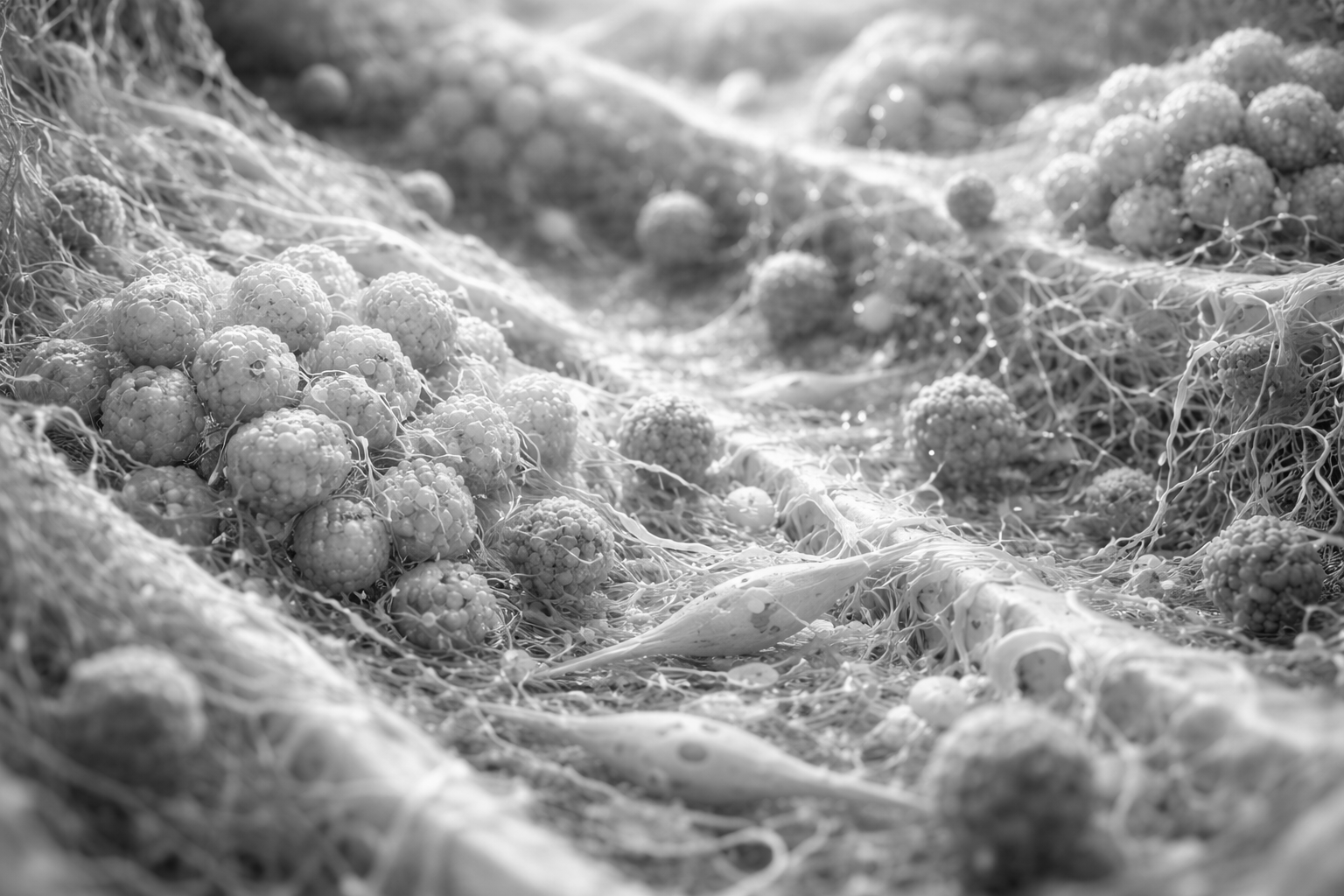

BioECMCode™ products undergo internal characterization to ensure consistency and quality, including:
These internal evaluations focus on physical and manufacturing parameters, not biological performance claims.
BioECMCode™ platforms are designed to support experimental workflows where extracellular structure is known to play a role, including:
Evidence generated using BioECMCode™ products is intended to complement existing biological assays by providing controlled physical context, not to replace biological validation.
BioECMCode™ is an evolving platform. As products are adopted and evaluated across different applications, additional data, case studies, and peer-reviewed collaborations will be shared to further document performance and use cases.
Our commitment is to transparent, application-driven evidence that reflects how the platform is used in real laboratory workflows.
Clear boundaries help keep the platform scientific, credible, and responsibly communicated.
Use BioECMCode™ to control physical context. Interpret outcomes using your established assays, controls, and biological expertise.
BioECMCode™ grounds innovation in established science by delivering reproducible extracellular environments built on known principles of physical cell–environment interaction.